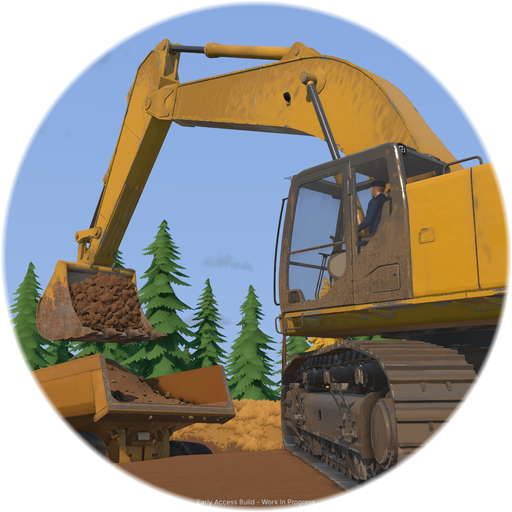
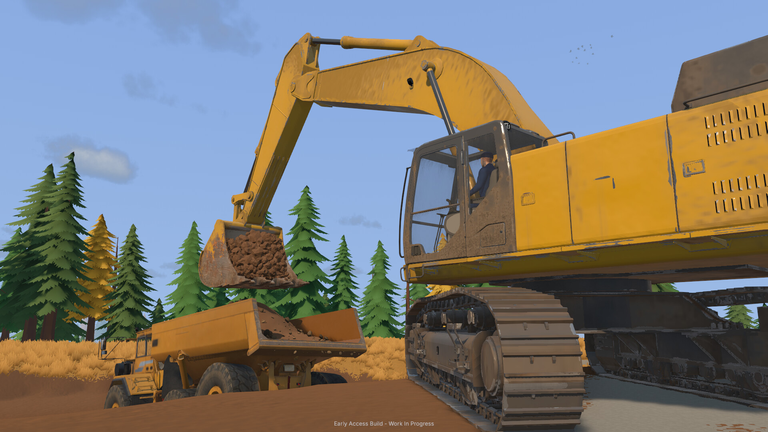
Stepping into the world of Groundwork Simulator heavy machinery requires patience, precision, and an appreciation for realistic physics. Whether you are moving mountains of dirt or optimizing your gold recovery setup, understanding how to operate Groundwork Simulator heavy machinery is the key to turning an untouched open world into a thriving mining empire.
Understanding the Excavation and Physics Engine
The core of the experience relies heavily on a complex simulation that mimics real-world earthmoving equipment. Unlike arcade-style titles, every scoop you take with Groundwork Simulator heavy machinery impacts the surrounding topography, creating authentic ruts, massive piles, and challenging slopes.
To help you get started with the excavation mechanics, the table below outlines the primary controls and tips for handling your digging equipment effectively.
| Machine Type | Primary Controls | Operational Tip |
|---|---|---|
| Excavator | Dual tracks (R/Y & left/right sticks), Boom/Bucket angles | Use both tracks independently to maneuver and avoid grounding your bucket prematurely. |
| Wheel Loader | Steering, bucket lift, and tilt | Keep engine power steady to ensure the hydraulic system lifts heavy payloads smoothly without stalling. |
| Rotary Drill | Stabilization (G), Drill down (K), Pipe feeding | Always deploy stabilizers before drilling to maintain depth accuracy and prevent rig drift. |
According to player experience and community reports, mastering individual track controls takes time. If you push your bucket too flat against the ground, your treads can lose traction, forcing you to reposition carefully.
Setting Up Your Water Systems and Wash Plant
Excavating dirt is only half the battle. Without a reliable water network, your washing equipment will sit completely idle. Setting up efficient infrastructure requires careful hose placement and power management.
| Equipment Component | Function | Setup Requirement |
|---|---|---|
| Pump One | Pulls water from the local river | Submerge the intake line deep enough to maintain steady flow into your main storage pond. |
| Pump Two | Supplies water from the pond to the wash plant | Connect lines directly to the wash plant to ensure continuous spraying and rock separation. |
| Generator | Powers pumps and washing units | Must be placed on the edge of the work site and supplied with constant fuel/operational power. |
As noted by early access players, monitoring your water levels is crucial because ponds can occasionally overflow if intake exceeds capacity. Turning off inactive pumps when you step away from your wash plant also helps manage operational overhead.
Prospecting and Drilling for Valuable Deposits
Before you tear up a hillside, you need to know where the paydirt is actually hiding. Randomly digging trenches wastes time and fuel, making proper prospecting an essential step in your expansion strategy.
| Prospecting Step | Tool / Machine | Action Required |
|---|---|---|
| 1. Ground Scanning | Scanner Coil / Metal Detector | Walk the terrain to find areas marked with medium to high deposit probability. |
| 2. Core Sampling | DR64 Mobile Drill Rig | Hire, transport, and set up the rig over high-probability zones. |
| 3. Bore Hole Analysis | Drill Log Monitor | Drill down 2 to 4 meters to identify the exact depth of the gold-rich gravel layer. |
Community feedback highlights that gold deposits typically sit beneath a shallow layer of topsoil and above dense clay layers. Using the DR64 drill rig allows you to add extension rods so you can punch deeper into the strata and map out exact paydirt depths before dispatching your excavators.
Logistics: Transporting and Maintaining Your Fleet
Moving massive equipment across an open-world map is an adventure in itself. You cannot simply drive an excavator across the entire landscape without burning through time and traction.
| Logistics Task | Best Practice | Common Pitfall |
|---|---|---|
| Machinery Transport | Load heavy assets onto low-profile trailers hauled by your main utility truck. | Taking sharp turns too fast with a heavy load can cause tip-overs and lost traction. |
| Site Navigation | Lock differentials when crossing rough terrain, mud, or steep inclines. | Forgetting to clear fallen trees or smoothing out deep ruts, which traps transport trucks. |
| Maintenance & Economy | Rent equipment during early tutorials, buy permanent assets as capital grows. | Keeping generators and pumps running constantly when no material is being processed. |
For more details on the game’s release and roadmap, check out the official Steam Store Page for Groundwork Simulator.
Solo Play vs. Online Co-Op Efficiency
While playing solo lets you learn the ropes at your own pace, the game truly shines when you divide and conquer with friends in online co-op.
| Job Role | Recommended Task | Co-Op Synergy |
|---|---|---|
| The Excavator Operator | Digging paydirt in the pit, loading trucks | Keeps a steady stream of material ready for the transport team. |
| The Transport Driver | Hauling full buckets/truckloads to the hopper | Minimizes downtime between the pit and the washing plant. |
| The Plant Manager | Monitoring pumps, clearing oversize rocks, running cleanup tables | Ensures continuous gold processing without blockages. |
Player experience suggests that coordinating these roles transforms a tedious solo grind into a highly satisfying assembly line.
Frequently Asked Questions
How do I get better excavation performance in Groundwork Simulator?
Ensure your machine’s hydraulics have enough engine power by avoiding constant idling under heavy loads. Smooth, deliberate movements with both the boom and the bucket curl will yield fuller scoops without bogging down your tracks.
Is Groundwork Simulator playable in multiplayer?
Yes, the game supports online co-op for up to four players, allowing you to divide tasks like digging, hauling, and operating the wash plant among your crew.
Where is the gold located on the map?
Gold is found by using a scanner coil to locate promising areas, followed by deploying the DR64 drill rig to test core samples. Typically, rich paydirt sits a few meters beneath the topsoil layer.
What are the main PC system requirements?
Due to complex soil and water deformation physics, the game is CPU-heavy. At minimum, you will need a 64-bit Windows 10 OS, an Intel Core i5-8400 or AMD Ryzen 5 2600, 16 GB of RAM, and an NVIDIA GTX 1070 with 8 GB VRAM.