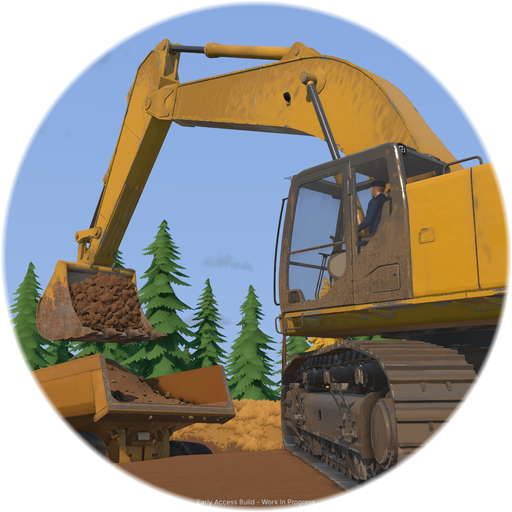
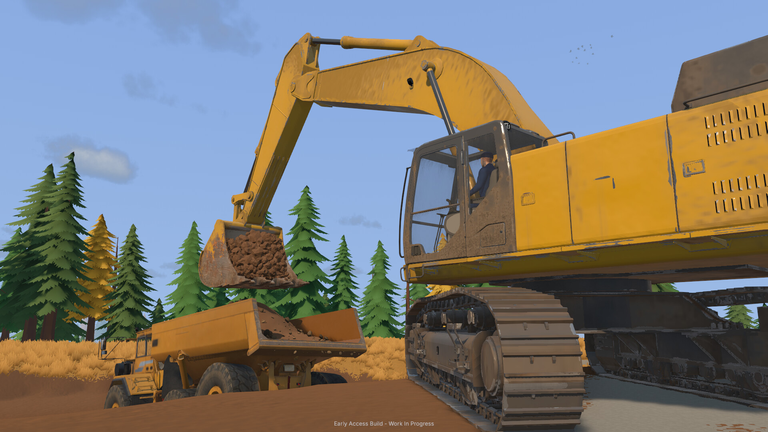
Have you ever wanted to transform an untouched landscape into a thriving industrial empire using massive heavy machinery? The Groundwork Simulator construction game delivers an immersive sandbox experience where every scoop of dirt reshapes the world around you. Whether you are operating excavators, managing water pipelines, or hunting down valuable gold deposits, mastering the Groundwork Simulator construction game requires patience, strategy, and a firm grasp of realistic soil physics.
Understanding the Core Loop: From Raw Dirt to Gold Empire
Every successful venture in this simulation starts with a fresh claim. Rather than blindly digging up terrain, professional operators must approach their worksite with careful planning and geological testing. Player experience shows that rushing into excavation without testing your ground leads to wasted time, burned fuel, and inefficient logistics.
| Phase | Primary Objective | Key Equipment Needed |
|---|---|---|
| Exploration | Locate high-yield deposits | Drills, survey tools |
| Excavation | Strip topsoil and recover paydirt | Excavators, bulldozers |
| Transport | Move material to processing hubs | Wheel loaders, haul trucks |
| Processing | Separate gold from stone and mud | Wash plants, sluice boxes, shaking tables |
Once you pinpoint a promising location using drill data, your heavy equipment goes to work. You must carefully strip away layers of topsoil to reach the gold-bearing paydirt beneath. Every pass of your bucket alters the terrain, meaning the path you carve today becomes the logistical highway for tomorrow’s transport trucks.
Mastering Realistic Physics and Hydraulic Resistance
What sets this title apart from traditional arcade building games is its sophisticated simulation engine. The software features fully deformable soil mechanics and authentic hydraulic feedback that transforms every movement into a weight-driven challenge.
When you drop your bucket into a hillside, you will physically feel the resistance of the earth. If you push your machine too hard or approach a slope at an awkward angle, your tracks may lose traction in the mud.
| Machine Type | Primary Function | Operational Challenges |
|---|---|---|
| Excavators | Deep trenching and digging paydirt | Managing hydraulic power limits and bucket angles |
| Bulldozers | Clearing topsoil and leveling terrain | Maintaining traction on steep, muddy slopes |
| Wheel Loaders | Scooping and loading loose material | Balancing weight limits during transport cycles |
| Haul Trucks | Moving heavy payloads across sites | Navigating tight turns with unstable loads |
Community reports emphasize that fighting the terrain is half the battle. Steep slopes, thick mud, and shifting ground require you to constantly evaluate your route. Sometimes, your immediate priority isn’t digging for ore—it is grading the road beneath your wheels so your heavy transport vehicles can make it back to the base camp safely.
Setting Up Your Water and Logistics Networks
Excavating paydirt is only half the battle; processing it efficiently determines whether your company turns a profit. Your wash plant requires a constant, reliable supply of water to wash away dirt and reveal the precious metals hidden inside.
Establishing a functional washing facility involves several critical steps:
- Source Location: Identify the nearest water source relative to your processing plant.
- Pump Installation: Position industrial water pumps to draw fluid from the source.
- Hose Routing: Connect flexible lines carefully across the terrain, avoiding pinch points and heavy traffic lanes.
- System Adaptation: Expand your piping network as your operation scales up and your excavation sites move deeper into the map.
If your water pressure drops or a hose gets disconnected, your entire washing pipeline grinds to a halt. Efficient planning of your utility grid is just as vital as managing your digging fleet.
Transporting Heavy Machinery Across the Map
Your operations will not stay in one spot forever. As you exhaust local deposits, you must pack up your fleet and move to a fresh claim. This introduces the intricate transport mechanics of the game.
You cannot simply drive an excavator across the entire landscape at top speed. Instead, you must line up your heavy machinery onto specialized trailers, hitch them to heavy-duty trucks, and carefully haul your gear to the next worksite.
| Transport Step | Best Practice | Potential Risks |
|---|---|---|
| Loading | Align machinery squarely on the trailer ramps | Rolling equipment off the edge or getting stuck |
| Route Planning | Check the map for steep grades and tight turns | High centering your trailer on uneven terrain |
| Hauling | Drive defensively with momentum management | Losing traction or jackknifing on muddy downhills |
| Unloading | Position the trailer on stable, level ground | Tipping the vehicle during detachment |
Navigating rough terrain with a massive trailer hitched behind your truck tests your driving skills. Taking a corner too fast or misjudging a slope can send your hard-earned machinery sliding off the road, forcing you to rescue your fleet before work can resume.
Solo Play Versus Online Co-Op Strategies
While you can certainly run your mining enterprise as a lone wolf, the game shines brightest when played with friends in online co-op. Splitting up responsibilities transforms a tedious workflow into a well-oiled machine.
Here is how you can effectively divide labor on a multiplayer server:
- The Excavator Operator: Focuses entirely on cutting into the hillside, managing bucket loads, and filling waiting trucks.
- The Transport Specialist: Runs wheel loaders and haul trucks between the digging face and the wash plant, keeping material flowing without interruption.
- The Maintenance Engineer: Monitors the water pump systems, manages machinery refueling, and grades roads to prevent vehicles from getting stuck in the mud.
Coordinating your machines in real time allows you to turn an untouched wilderness into an industrial powerhouse in a fraction of the time it takes solo. Check out the official Groundwork Simulator Steam Store Page to learn more about current early access updates and community features.
Frequently Asked Questions
What kind of PC specs do I need to run Groundwork Simulator?
Because the game features complex soil deformation and advanced water physics, it places a heavy load on your CPU. Minimum requirements suggest an Intel Core i5-8400 or AMD Ryzen 5 2600 paired with 16 GB of RAM and an NVIDIA GTX 1070 graphics card.
Can I play Groundwork Simulator with my friends?
Yes! The game features fully integrated online co-op, allowing you and your friends to share a worksite, coordinate heavy machinery operations, and build a mining empire together.
How do I recover gold after digging up dirt?
Once you excavate gold-bearing paydirt, you must transport it to a properly supplied wash plant. Use pumps and hoses to feed water into the system, run the material through sluice boxes, and finish the process on the shaking table to secure your final payout.
Is Groundwork Simulator available in Early Access?
Yes, the title launched into Steam Early Access to gather community feedback, refine its gameplay systems, and plan future content expansions like new maps and vehicles.